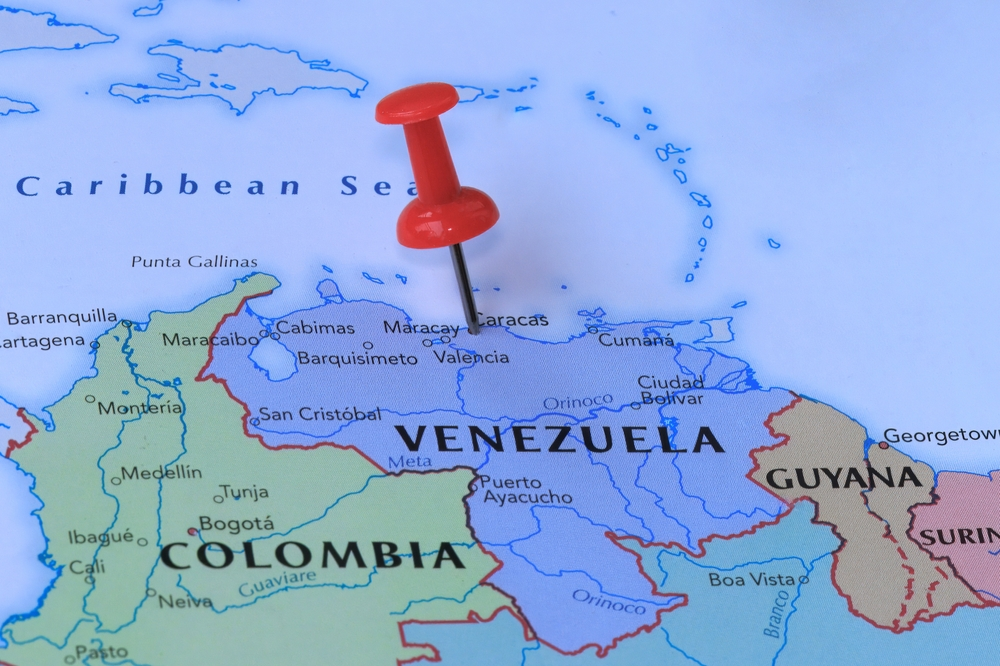
Operation Absolute Resolve is a military operation in 2026 carried out by the United States military, leading to the arrest of Venezuelan President Nicolas Maduro and his wife, Cilia Flores. The operation was conducted on January 3, 2026, when the airstrike was conducted in Caracas, while Maduro himself was apprehended for narco-terrorism charges in New York.
With the dawn of January 4, 2026, geopolitical borders in the Western Hemisphere begin to be drawn again. It is not merely an act of force but one of the most important manifestations of the Monroe Doctrine in over a hundred years.
The Raid Operation absolute resolve: How “Absolute Resolve” Unfolded
This operation, ordered by President Donald Trump at 10:46 p.m. EST on Friday, is a brilliant example of contemporary electronic warfare and special operations. It appears that before landing on Venezuelan soil, the United States managed to disable certain segments of the Venezuelan electricity system through its cyber capacities.
- The Fleet: Around 150 aircraft were launched from 20 different bases across the Western Hemisphere.
- The Breach: Elite Delta Force units, supported by the CIA, breached Maduro’s compound at Fort Tiuna. The operation was so swift that Maduro was captured before he could reach his reinforced bunker.
- The Extraction: By 3:00 AM local time, Maduro and Flores were on a transport plane bound for the USS Iwo Jima.
- Casualties: While the U.S. reported zero casualties among its own forces, at least 40 Venezuelan personnel were killed in the initial strikes on air defences.
Why now? The Legal and Strategic Justifications
The U.S. Department of Justice, led by Attorney General Pam Bondi, has unsealed a massive indictment against the Maduro regime. The primary charges include:
- Narco-Terrorism Conspiracy: Alleging that Maduro led the “Cartel of the Suns” to flood the U.S. with cocaine.
- The Monroe Doctrine: President Trump has explicitly cited the 1823 doctrine (which he colloquially dubbed the “Donroe Doctrine”) to justify removing “hostile foreign influence” from the Americas.
National Security: The administration pointed to a “shadow fleet” of tankers and illicit gold mining as a direct threat to the economic stability of the region.

Oil: The $100 Billion “Energy Rebuild”
Venezuela possesses the largest oil deposits in the world, estimated at about 300 billion barrels of oil. Nevertheless, due to negligence over many years, Venezuela’s infrastructure has completely deteriorated. With the implementation of the new “Absolute Resolve” policy, rebuilding and repayment are America’s only priorities.
| Key Metric | Status (Jan 4, 2026) | 2026 Projections |
| Crude Oil Price | $57.32/barrel (Falling) | Expected to stabilize in the $50s. |
| Daily Production | ~1 Million Barrels | Expected to stabilise in the $50s. |
| Investment | Sanctions Blocking Capital | Billions in U.S. private capital expected. |
President Trump has already signalled that major U.S. oil companies will lead the restoration efforts, with the costs of the military operation being “repaid” through future Venezuelan oil revenue.
The Global Fallout: Allies vs. Adversaries
The capture of a sitting president is an unprecedented act in modern history, and the global reaction has been instantaneous and polarised.
- The “Anti-Intervention” Bloc: China and Russia have issued a joint statement denouncing the “barbaric kidnapping” of a sovereign head of state. The Chinese Foreign Ministry was “shocked” by this and pointed to possible instability in the region.
- The Supporters: Israel and some members of the G7 countries have welcomed the step as an anti-narco-dictatorial victory.
- Regional Alarm: In Latin America, neighbouring countries like Colombia and Brazil have deployed troops to their respective borders out of fear that a “vacuum of power” in Caracas may cause another exodus of refugees or a civil war between Chavistas and the new regime.
What Happens Next? The “Power Vacuum” Problem
With Vice President Delcy Rodríguez announcing a state of emergency at the national level and assuming control of the presidency, Venezuela remains a nation that is split in half. According to U.S. plans, the country will be “run” until a proper and judicious transition is made possible. However, transitions facilitated from outside rarely go smoothly.
Key Questions for the Week Ahead:
- Will the Venezuelan military stay loyal to Delcy Rodríguez?
- How will the UN Security Council vote during the emergency session on January 5?
- Will the capture of Maduro lead to a similar “domino effect” in places like Cuba?
This is a developing story. The legal trial in New York and the ground reality in Caracas are shifting by the hour. One thing is certain: the era of “strategic patience” with Venezuela is over.

