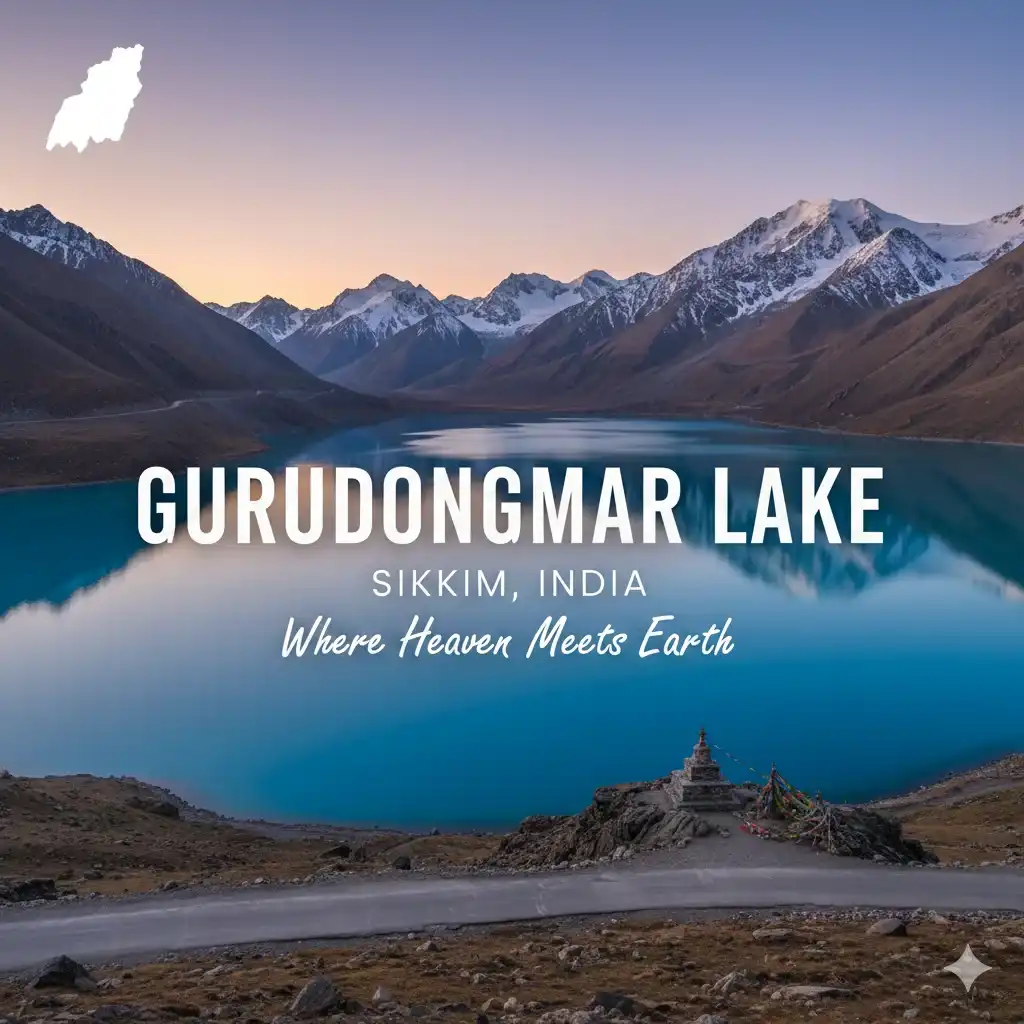
In my opinion, some parts of the earth should never be conquered by man. They are just places where you can spend a little time, but only if the mountain allows you to. That’s what I feel about Gurudongmar Lake, an area that cannot be called a tourist destination because it is far from a normal destination spot like beaches and cities. Instead, it is a place for testing your willpower.
Gurudongmar Lake is located at an elevation of 17,800 feet in North Sikkim, India. It is the highest lake that is accessible to man. While statistics like figures might not impress anyone, this place is special. This place is known for its eerie environment because the air here is very thin. As such, one can easily hear their heartbeat.
The Long Road Up the Gurudongmar Lake
Your trip begins long before you spot any water. Typically, your base will be Lachen, the small hill station town perched precariously on the slopes of the Himalayas. You are woken at 3:00 AM by the icy chill and forced to choke down some tea before jumping into a four-wheel-drive vehicle.
No, the trip is not going to be easy. The route itself consists of nothing more than an illusion of a road made up of rocks and ice from melted streams. However, as the morning sun rises, the environment changes in a strange and mystical way. You move from the greenery and flowers of Lower Sikkim to what can only be described as a cold desert landscape. The view is alien and harsh. Miles upon miles of brown, rocky wasteland stretching towards the horizon. Watching the trees vanish into nothingness before you until only rock and sky remain definitely gets you into the right state of mind.
Also Read: Chilla Kalan in Kashmir: The Snowfall Season Explained
That First Glimpse
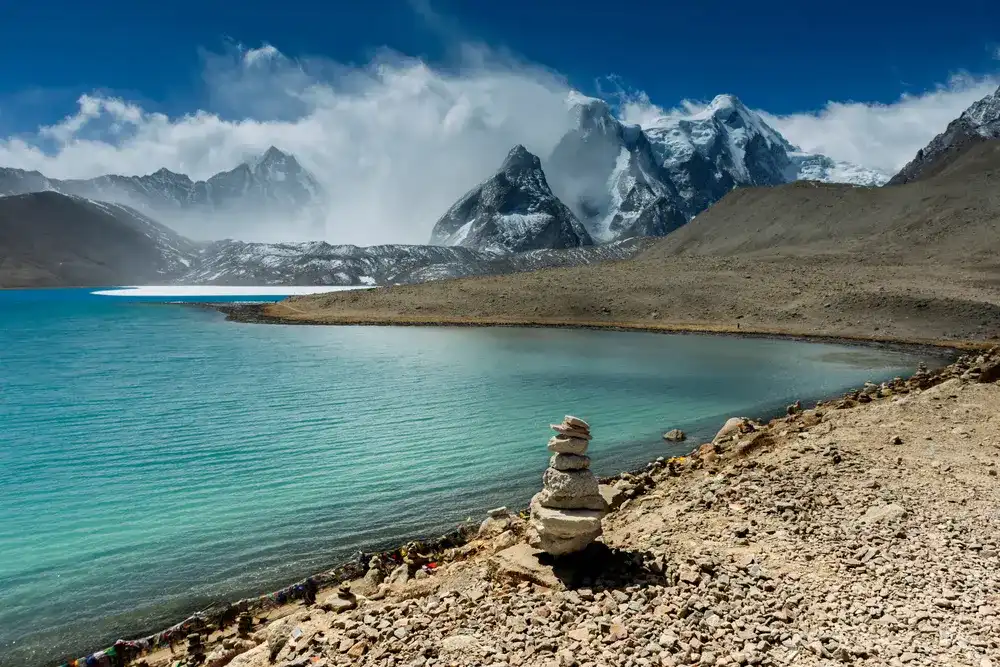
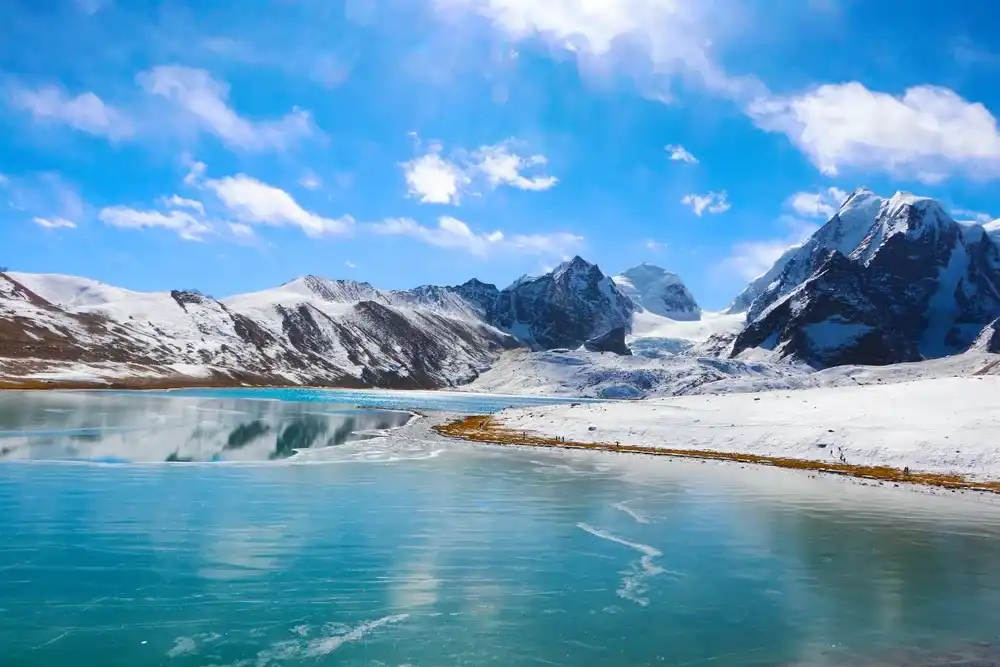
But once you’ve made your way past that last ridge, and see the lake before you, you’ll be in for a shock. It’s a beautiful, intensely deep shade of turquoise blue – a blue so intense that it almost seems as though the color has been painted on top of the earth.
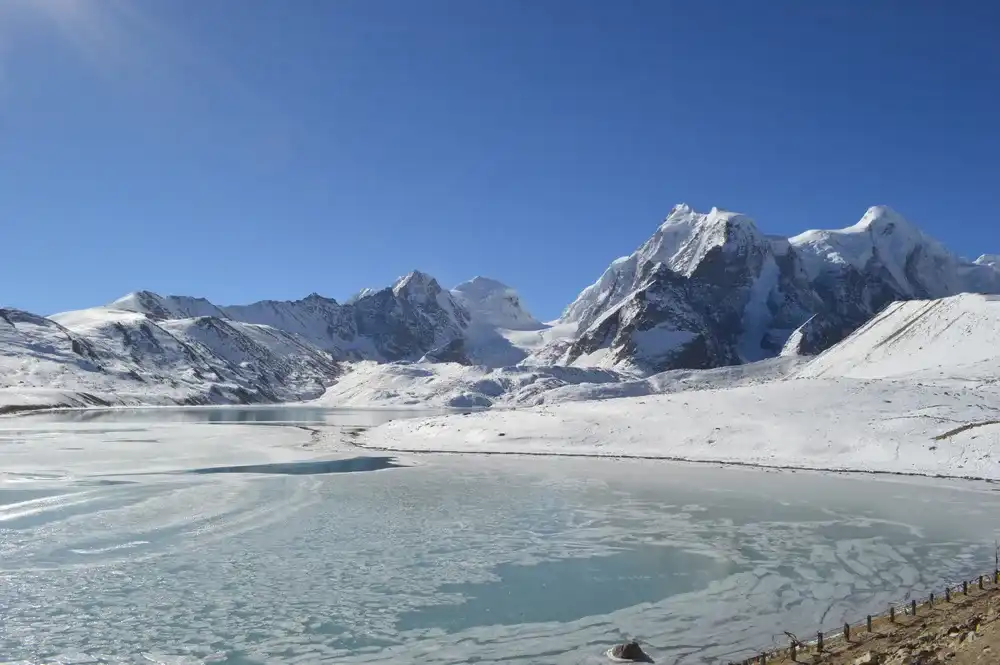
There’s a local tale about how the legendary Guru Padmasambhava, who introduced Buddhism to Tibet, touched a corner of the lake to provide its inhabitants with water all year round. And when you stand there and look out at the lake, it’s hard not to believe the story. Despite the lake freezing over in winter, there’s always one spot that remains liquid. Seeing the prayer flags whipped fiercely by the wind, yet the water remained so calm… Questions don’t even come to mind.
The Reality of the Altitude
However, one has to be very cautious here. I have come across instances of people getting out of the car to capture pictures but ending up with an awful headache and dizziness after 5 minutes of the experience due to the high altitude. The body will have to work extra hard for you to maintain your balance, and movement has to be at half speed, since taking even ten paces will make you feel exhausted, as if you have just participated in a race.
Wind in the Gurudongmar Lake is another factor, which should not be underestimated either. In addition to the strong gusts, which can be felt by the skin, the temperature drops low enough to make one shiver despite the sun. Typically, the Indian Army, which has been stationed there since the lake lies right next to the Indo-Tibetan border, makes everyone leave the area at 10:00 or 11:00 AM.
Why It Stays With You
Gurudongmar Lake is no easy journey. You’ll be tired, your head will hurt a little, and you’ll be all ruffled up due to the bumpy road you took to get there. But when you stand right next to the lake and see the reflection of the mighty Himalayas, you suddenly realize how remote the real world seems to be. It is such an overwhelming experience. And there’s something wonderfully soothing about realizing how insignificant you are.
Just in case you ever have a chance to visit Gurudongmar Lake, don’t miss out. All you have to do is keep breathing, mostly because of the breathtaking view, and mainly because there isn’t really enough oxygen around.