
There is a well-known fear in the atmosphere: in the near future, artificial intelligence will take over the place of people in all professions. Authors are afraid of being ousted from their posts by the computer-generated text. Drivers are afraid of self-driving cars. Designers, analysts, and even doctors – almost everyone is preparing for the storm.
Many experts claim that the fear is based on a misunderstanding. Artificial intelligence doesn’t replace jobs but replaces tasks. Work requires intuition, judgment, human interactions, contextual understanding, and empathy, something that computers haven’t been able to do yet. Thus, the motto “AI won’t take your job” is relevant today.
However, there is a catch in this story. According to Elon Musk, the distant future might have nothing to do with task automation. It might come up to redefining the necessity of jobs themselves.
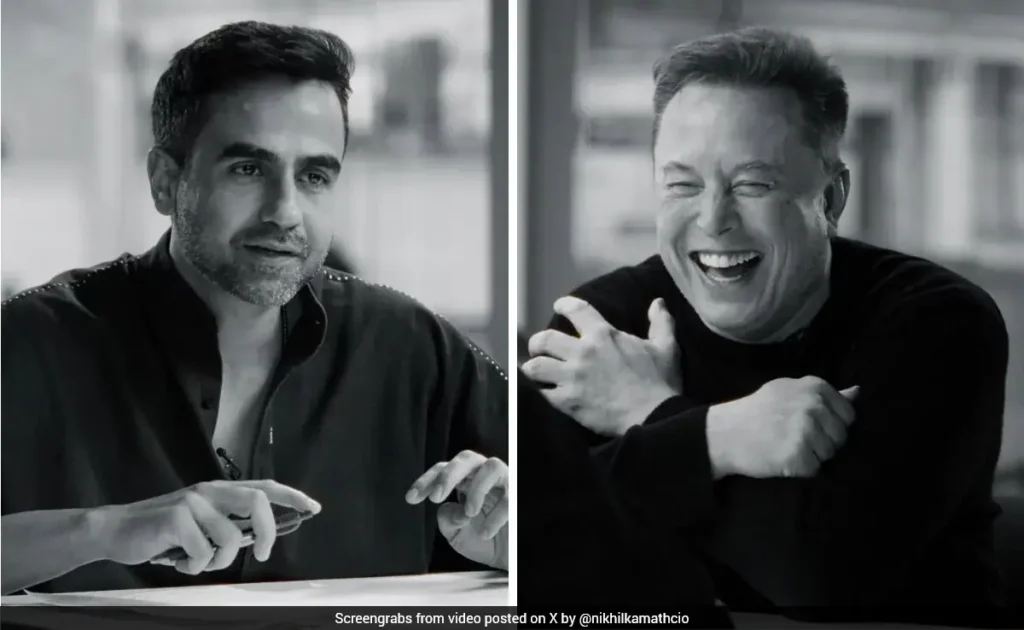
Musk’s Vision: Work as Optional
In recent public remarks, Musk painted a radical picture of the future shaped by AI and robotics. He said:
“In a benign scenario, probably none of us will have a job.” Moneycontrol
He went on to describe what that world might look like:
“There will be universal high income and not universal basic income. Universal high income. There’ll be no shortage of goods or services.” Moneycontrol
In other words, if AI and robotics take over production, humans might not need to work for survival. Work would become a choice, not a necessity. As Musk put it:
“If you want to do a job that’s kinda like a hobby, you can do a job.” The Financial Express
This implies that employment might be voluntary rather than compulsory in the form of jobs, and necessities would be provided by automation.
Elon Musk does not present this vision as something inevitable but rather as a probable “benign outcome”. According to him, this change may affect our attitude towards work, values, and meaning. Moneycontrol
Elon Musk: Why “AI Won’t Take Your Job” Still Holds for Now
Even if Elon Musk’s claim is ambitious, the current situation is somewhat less dramatic. AI and automation have started to alter our workplace realities, but only by transforming jobs instead of making them obsolete.
There are some characteristics that an individual can possess and a machine cannot – empathy, subtlety, leadership skills, flexibility, ethical considerations, and immediate human interaction. Teaching isn’t about transferring knowledge alone; nursing is not merely about treating physical conditions, and a manager’s job is about addressing challenges that weren’t even present before.
In the foreseeable future, artificial intelligence could speed up or optimize certain aspects of working life but not make them meaningless. In all likelihood, one’s occupation would change but not vanish altogether.
This is exactly why the slogan “AI won’t take your job” remains relevant.
Bridging the Two Visions: Evolution and Revolution
At first glance, the “AI augments work” view and Elon Musk’s “AI makes work optional” vision might seem contradictory. But they may represent two stages of a long-term transition:
- Stage 1 Evolution (Next 5-15 years): AI develops into a very important tool. It streamlines mundane activities; it aids humans in working fast, efficiently, and intelligently. Job opportunities will exist, but the skill requirements will change. People will work alongside machines.
- Stage 2 Revolution (10-30 years out): With the high levels of automation along with robotics, material automation, and effective resource generation, there may come a time when several types of jobs would become obsolete for survival purposes. Working will not be compulsory for individuals anymore.
In such scenarios, the concept of work, success, earnings, and value will become entirely different. The new slogan would become “What do you want to do?” rather than “What do you have to do?”
What This Means for You and What You Can Do
If you want to prepare for both near-term and long-term futures, here are some guidance points:
- Develop human-centred skills. Things like empathy, creativity, critical thinking, and leadership abilities that machines can’t replicate easily will remain valuable.
- Use AI as a tool. Instead of fearing AI, learn to collaborate with it. Use it to amplify your strengths, not replace them.
- Stay flexible. The pace of change might accelerate. Be ready to learn, adapt, and reinvent yourself.
- Reflect on purpose. If future jobs become optional, find what gives you meaning: creativity, relationships, learning, social value, not just income.
- Advocate for fair systems. A shift toward universal high income or similar models will mean rethinking how society values work, fairness, and opportunity.
AI itself may never “take your job.” Rather, for many years to come, its primary effect will probably be on the transformation, not the elimination, of labor. Yet, according to Elon Musk, if AI and robotics continue to develop, and if society evolves appropriately, there will eventually come a time when you no longer need to work in order to earn a living.
Then, the crucial consideration will no longer be whether you have a job. The question will be: How do you wish to spend your time, your energy, and your life?
It is a distant future that is rife with uncertainties. But if we think carefully about our preparation for it, we might discover that automation is less of a curse than a blessing.


Good post. I learn something totally new and challenging on blogs
I stumbleupon on a daily basis. It will always be exciting to read through articles from
other writers and practice something from their websites.
Hi there, its nice piece of writing about media print, we all understand media is a
great source of information.